BlackRock, Carhartt, Ford and Google Launch New Alliance to Expand Skilled Workforce Training
America’s Biggest Companies Are Betting on the Skilled Trades. The Construction Industry Should Pay Attention.
For years, the national focus centered on four-year college degrees, while careers in the skilled trades often received far less attention. Today, that narrative is shifting—and some of the world’s most recognizable companies are leading the charge.
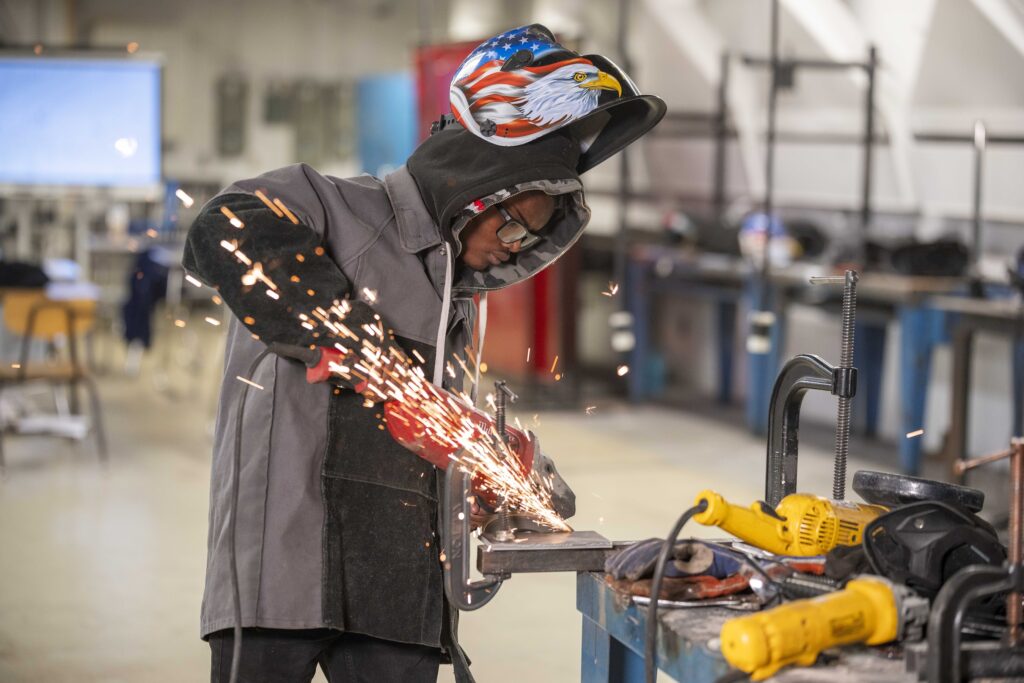
BlackRock, Carhartt, Ford Motor Company, and Google have announced the formation of the Alliance for America’s Skilled Trades, a collaborative effort designed to expand workforce training, increase awareness of skilled careers, and strengthen the nation’s pipeline of electricians, technicians, welders, builders, mechanics, and other essential craft professionals.

The founding organizations have already committed to supporting skilled workforce initiatives across 30 states, recognizing that America’s ability to build its future increasingly depends on having enough people with the skills to do the work.
A Workforce Challenge That Impacts Every Industry
The timing could not be more significant.
Industry forecasts estimate that approximately 2.1 million skilled trades positions could remain unfilled by 2030, creating challenges across construction, infrastructure, manufacturing, energy, transportation, utilities, and advanced technology.
For contractors throughout the Carolinas, this is hardly surprising.
Nearly every construction executive today identifies labor availability—not demand—as one of the industry’s greatest strategic constraints. While project opportunities continue to expand, particularly in sectors such as advanced manufacturing, data centers, power infrastructure, healthcare, and industrial development, finding qualified people to execute the work has become increasingly difficult.
The skilled labor shortage is no longer simply a hiring issue. It has become an economic competitiveness issue.
More Than Jobs—A Pathway to Opportunity
One of the Alliance’s core messages is that the skilled trades offer far more than employment.
Many skilled occupations provide above-average wages, strong benefits, long-term career stability, retirement opportunities, and upward mobility—often without requiring the financial burden of a traditional four-year college degree.
As demand continues to outpace supply, these careers are becoming even more valuable.
For younger generations evaluating career options, the trades increasingly represent an attractive pathway into the middle class and beyond.
Three Areas of Focus
The Alliance intends to concentrate its efforts in three primary areas:
- Expanding awareness of skilled trades careers and increasing access to training opportunities.
- Scaling proven workforce development models, including apprenticeships and pre-apprenticeships that allow individuals to earn while they learn.
- Building broader partnerships among industry, labor organizations, educational institutions, nonprofits, and workforce organizations to strengthen the national talent pipeline.
The initiative will also work with workforce analytics firm Burning Glass Institute and Jobs for the Future to better understand workforce gaps, measure outcomes, and identify best practices.
Industry Leaders Weigh In
Executives from each founding company emphasized that America’s long-term competitiveness depends upon investing in people as much as infrastructure.
Bayo Ogunlesi, Chairman and Chief Executive Officer of Global Infrastructure Partners, part of BlackRock, said:
“Investment in America’s infrastructure will help shape the country’s long-term economic trajectory, but its success ultimately depends on the skilled workforce that brings these projects to life.”
Linda Hubbard, President and CEO of Carhartt, highlighted the company’s longstanding commitment to trades professionals:
“For more than 137 years, Carhartt has proudly served the skilled men and women who build, repair, and keep America running.”
Ford President and CEO Jim Farley described the issue in particularly direct terms:
“The skilled trades workforce shortage is a national crisis but also a generational opportunity.”
He added that the skilled trades are central to what Ford calls the Essential Economy—the millions of Americans who build, move, repair, and maintain the systems society depends upon every day.
Ruth Porat, President and Chief Investment Officer of Alphabet and Google, emphasized that solving the workforce challenge requires broad collaboration.
“Building the physical infrastructure for America’s future requires significantly increasing the pipeline of skilled tradespeople across the country—a challenge that can only be addressed with collective action.”
Why This Matters for the Carolinas
The Carolinas sit at the center of one of the fastest-growing construction markets in North America.
Record investment in advanced manufacturing, electric vehicles, semiconductors, life sciences, distribution, data centers, power infrastructure, healthcare, and population growth continues to drive unprecedented demand for construction talent.
The challenge facing contractors is increasingly not whether work exists—but whether they have enough skilled people to deliver it safely, profitably, and on schedule.
Initiatives like the Alliance for America’s Skilled Trades reinforce something construction leaders have understood for years:
The future of the industry depends on attracting, training, and retaining the next generation of craft professionals.
No single contractor, school, trade association, union, or company can solve this challenge alone.
Success will require coordinated investment across business, education, government, and nonprofit organizations.
The Bottom Line
Perhaps the most important takeaway is not simply that another workforce initiative has launched.
It is who launched it.
When global investment firms, iconic manufacturers, technology companies, and America’s largest employers unite around the importance of skilled trades, it signals a broader shift in how the country views workforce development.
For the construction industry, this should serve as both validation and opportunity.
The skilled trades are no longer simply supporting America’s growth.
They are becoming one of its most important competitive advantages.