

Are Living Shorelines Overused, Underused, or Just Misunderstood?
Living shorelines have become a familiar phrase in coastal work. If you attend conferences, work near the water, or talk with clients worried about erosion, you’ve probably heard the term more times than you can count. And for good reason. In the Carolinas, we see shorelines shift in real time, and everyone is looking for ways to respond.
The more I hear “living shoreline” used as a catch-all solution, the more I think it’s worth slowing down and talking honestly about what they are, what they aren’t, and when they actually make sense in a project. A living shoreline isn’t just a landscape feature; it’s a high-performing piece of infrastructure.
Start with the Site, Not the Solution
Most conversations about living shorelines begin when something is already going wrong, like a creeping waterline, erosion, or thinning vegetation. Often, it’s a homeowner or community watching land disappear and realizing the problem isn’t theoretical anymore.
That urgency is real, but it doesn’t mean every eroding shoreline is a good candidate for a living shoreline solution. From a design perspective, the most successful projects tend to share a few things:
- Room for the shoreline to move
- The right elevations
- Conditions that support vegetation over time
- Oyster beds if it’s an oyster-based living shoreline
When those elements aren’t there, even the best intentions can fall flat. Sometimes, the best decision is to do very little. A shoreline with a healthy and functioning habitat doesn’t always need intervention. In those cases, “doing something” can actually make things worse.
The Word “Living” Can Be Misleading
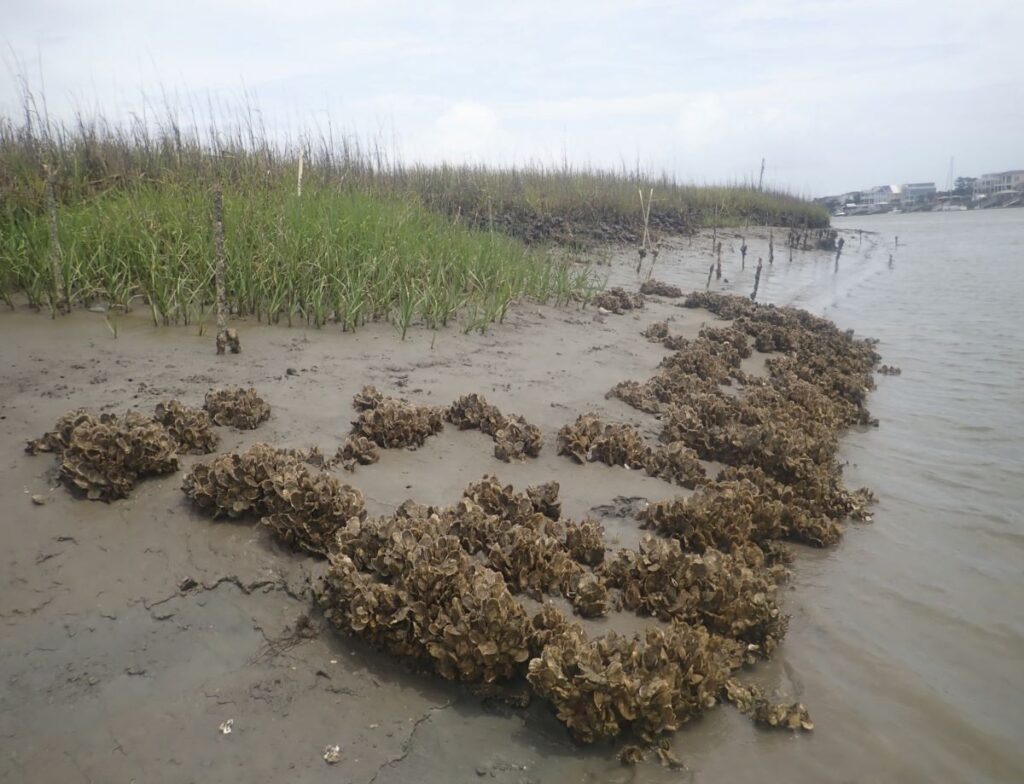
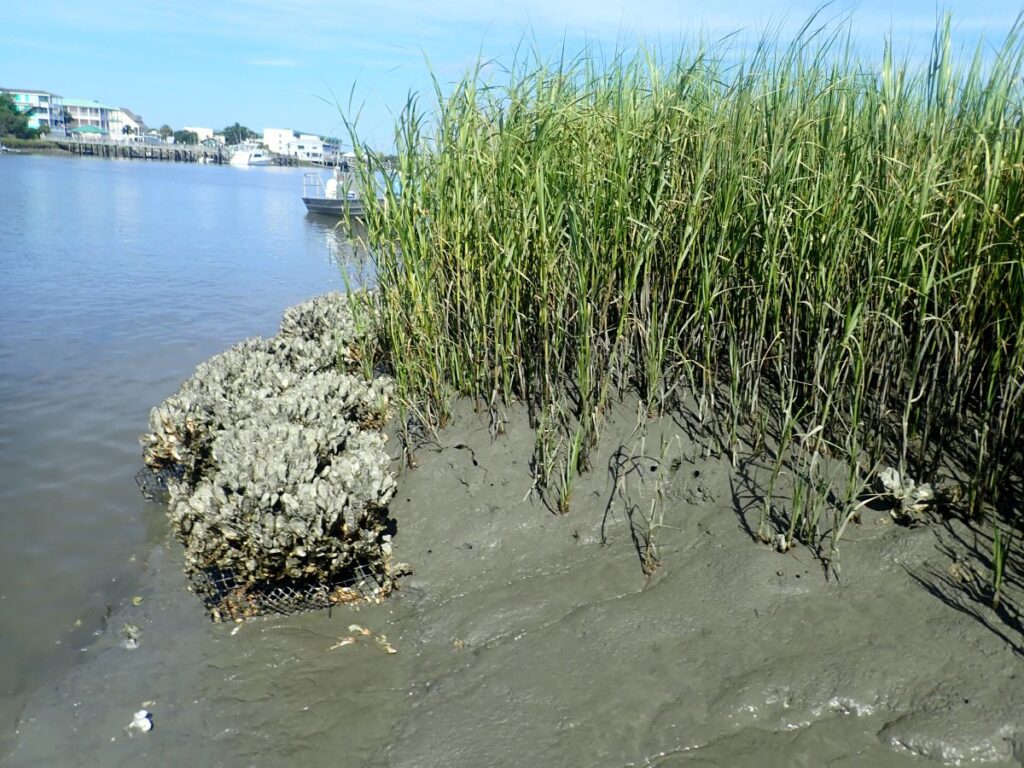
One of the most misunderstood parts of living shorelines is how they’re built. The name makes you think of fully natural systems, but many rely on heavy, man-made materials to get started. Concrete units, wire structures, and oyster shell systems often do the hard work of providing a foundation on which living systems can take hold.
That isn’t a bad thing, and research supports this, showing that oyster-based systems using bagged shell or cement-coated wire structures tend to outperform fiber-based materials like coir logs over time, especially in more energetic environments. Some “greener-looking” materials simply don’t last long enough to accomplish the job long-term.
A living shoreline isn’t automatically low-impact, low-maintenance, or guaranteed to work just because it sounds environmentally friendly. It works because it supports the systems around it.
Are We Overusing Living Shorelines?
Regulatory hurdles, cost concerns, and lack of experience still keep many communities from implementing living shoreline solutions. However, the real ‘green’ in living shorelines isn’t just the vegetation—it’s the potential for faster permitting and higher property appraisals in a market increasingly wary of sea-level rise. Where we can get into trouble is prescribing them too quickly, without fully understanding the site.
Living shorelines work best as part of a bigger resilience conversation. They’re one tool among many. When they are treated like a one-size-fits-all fix, projects may be doomed to fail before work even begins.
Communities that are thinking long-term are starting with broader resiliency or sustainability plans. Those plans might include living shorelines, but also policy changes, development setbacks, infrastructure upgrades, and conservation strategies. That layered approach is where nature-based solutions really shine.
Designing for Uncertainty is Part of the Job
One thing I’ve learned working with living systems is that certainty is a luxury we don’t have. A technique that works seamlessly in one location may struggle just down the coast. Small differences in depth, wave energy, or sediment can change everything.
Long-term studies show that even successful living shorelines can take years to show measurable benefits, and many require ongoing maintenance or adjustment. Monitoring and stewardship matter just as much as design and installation. A living shoreline is an investment, and like any investment involving natural systems, there’s risk.
Opportunity in the Carolinas
What gives me optimism is the level of collaboration happening right now. Engineers, landscape architects, ecologists, and agencies are sharing data, testing materials, and learning what works and what doesn’t. Programs like the Nature-Based Exchange are helping move the conversation from theory to practice.
There’s also value in looking beyond our region. Projects like SCAPE’s Living Breakwaters in New York show what’s possible at a larger scale and remind us that even ambitious nature-based projects rely heavily on engineered systems to succeed. For the Carolinas, the opportunity isn’t about chasing the newest product or label. It’s about refining our judgment, learning from built work, and staying honest about tradeoffs.
At the end of the day, coastlines are dynamic. They shift, adapt, and respond to forces we can’t fully control. Often, the most resilient thing we can do is give them space rather than trying to lock them in place. Living shoreline solutions can help support a dynamic coastline when they’re used thoughtfully and in the right context. They’re not magic, and they won’t work everywhere. But when they’re grounded in good site analysis, realistic expectations, and long-term care, they can be a meaningful part of how we design with water instead of fighting against it.
Main Photo (top of page) taken at Big Bay Creek behind Edisto Island – Bagged shell reef with marsh expanding in behind it. Notice the non-living shoreline area that has continued to erode. Photo courtesy of SCDNR.
For more information about SeamonWhiteside or to get in touch, visit SeamonWhiteside.com, sign up for the newsletter, or keep up with their latest projects and news on LinkedIn, Instagram, and Facebook.

About the Author — Mary Martinich Tweel is a landscape architecture team leader at SeamonWhiteside in Mt. Pleasant, SC, where she is passionate about using landscape architecture as a tool for long-term sustainability and creating projects with a lasting legacy. Her expertise includes large park and urban design, streetscapes and plazas, low-impact development, native planting design, and mixed-use projects. Outside of leading a team in the office, enjoys spending time outside with her husband and two young boys and serves on the Board of Charleston Moves.



