
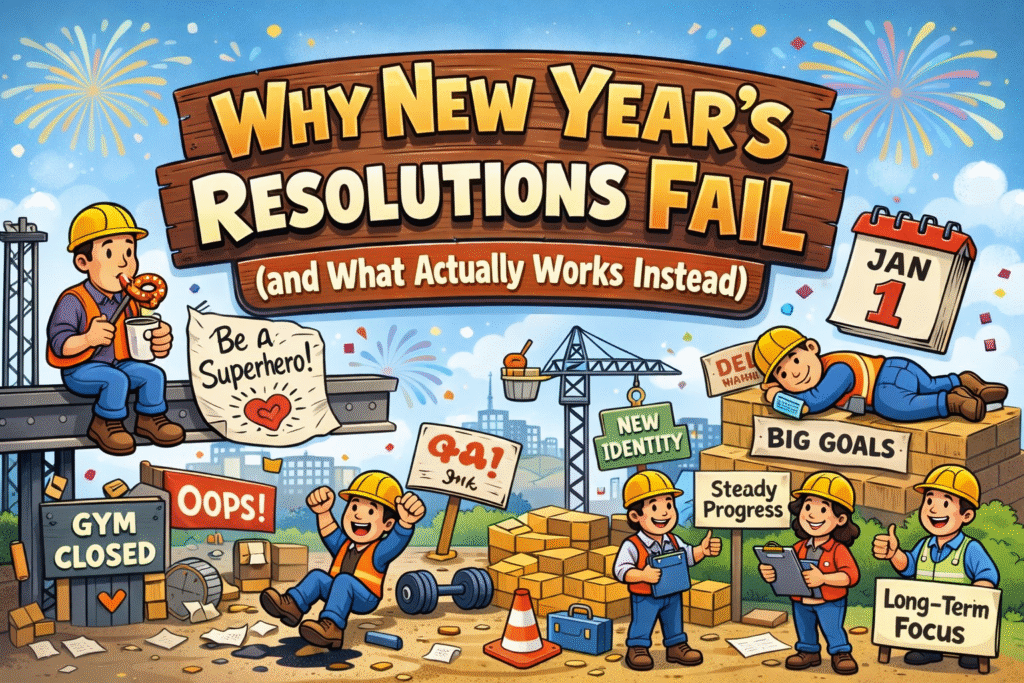
Why New Year’s Resolutions Fail
Every January, we perform the same ritual. We declare war on bad habits, vow to become new people, and announce bold intentions with the confidence of someone who has not yet met February.
And then… life shows up.
Meetings stack. Energy dips. Old patterns sneak back in wearing sweatpants.
By mid-February, most resolutions are quietly abandoned—not because people lack discipline, but because resolutions are fundamentally flawed as a mechanism for change.
Here’s why they fail—and what actually works if you’re serious about personal and professional growth.
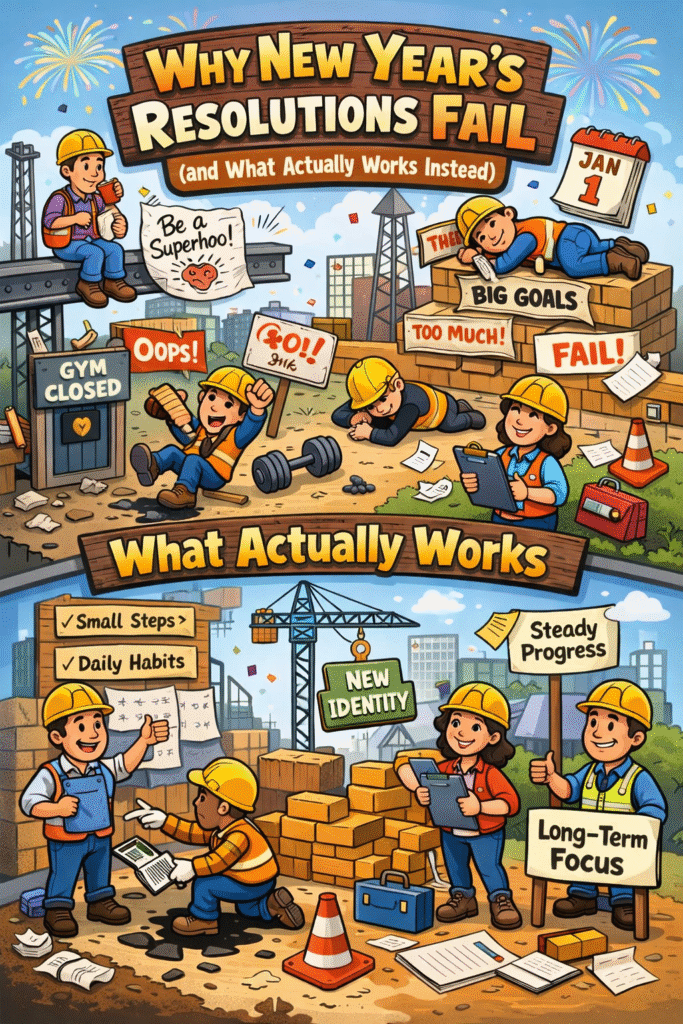
Why Resolutions Fail
1. They confuse intention with identity
“I’m going to exercise more” sounds reasonable.
But behavior doesn’t change until identity does.
People don’t rise to the level of their goals; they fall to the level of their self-image. If you don’t see yourself as a healthy person, a focused leader, or a disciplined thinker, resolutions become temporary acts of willpower rather than permanent shifts in behavior.
Willpower is a terrible long-term strategy. It’s like trying to white-knuckle your way through a lifestyle change with nothing but good vibes and a calendar reminder.
2. They’re abstract and disconnected from daily reality
Resolutions tend to be vague, oversized, and emotionally charged:
• “Be a better leader”
• “Get in shape”
• “Work less”
• “Be more strategic”
Nice sentiments. Zero operating plan.
Without being translated into specific, repeatable actions that fit into an existing schedule, resolutions float above reality like motivational posters—inspiring to look at, useless in execution.
3. They ignore friction and overestimate motivation
January optimism assumes future you will be more disciplined, more energized, and less distracted than present you.
Spoiler alert: future you is just you… with emails.
Most resolutions fail because they don’t account for friction—time pressure, mental fatigue, competing priorities, and the fact that motivation is wildly unreliable.
Systems beat motivation every time.
4. They rely on a calendar instead of a catalyst
January 1st is an arbitrary line in the sand. There’s nothing magical about it.
Real change happens when pain, curiosity, or opportunity creates urgency—not because the calendar flipped.
Without a compelling reason why now, resolutions lack emotional fuel. And without fuel, they stall.
What Works Instead: Shifting from Resolutions to Personal Change
If resolutions fail because they focus on outcomes, successful change focuses on process, identity, and environment.
Here are practical, business-relevant ways to think differently about personal change.
1. Trade goals for rules
Goals are aspirational. Rules are operational.
Instead of:
“I want to read more.”
Try:
“I read 10 pages before opening email every morning.”
Rules remove decision fatigue. They turn change into default behavior, not a daily negotiation with yourself.
2. Focus on who you’re becoming, not what you’re achieving
Ask a better question:
“What kind of person would naturally do the things I say I want to do?”
Then design behavior that reinforces that identity in small ways.
Leaders don’t “try to think strategically.”
They schedule thinking time.
High performers don’t “intend to learn more.”
They have a learning cadence.
Identity is built through evidence. Small wins create proof.
3. Shrink the change until it feels almost trivial
Most people aim too high and move too fast.
Sustainable change is embarrassingly small at the start:
• One meeting per week with no phone
• Five minutes of reflection at day’s end
• One uncomfortable conversation avoided no longer
Momentum beats intensity. Always.
4. Design the environment, not just the behavior
Environment is the silent architect of behavior.
If you want focus, remove distractions.
If you want reflection, create space.
If you want learning, make it unavoidable.
People don’t fail because they’re weak. They fail because their environment is perfectly designed to reinforce old habits.
5. Replace “accountability” with visibility
Accountability often feels punitive. Visibility feels social.
Share what you’re working on. Say it out loud. Put it on the calendar. Let others see the pattern you’re trying to build.
Change sticks when it’s witnessed.
6. Treat personal change like a long-term investment
The biggest mistake people make is expecting immediate returns.
Real change compounds quietly. The payoff shows up later—in better decisions, stronger relationships, clearer thinking, and more resilience under pressure.
The irony? The things that matter most rarely feel urgent in the moment. That’s why they’re so easy to postpone—and so powerful when finally practiced.
The Real Resolution
The problem isn’t that people don’t want to change.
It’s that they keep trying to change outcomes instead of systems.
This year, skip the dramatic declarations.
Skip the January guilt.
Skip the all-or-nothing thinking.
Focus instead on becoming 1% more intentional, 1% more disciplined, and 1% more aligned with the person you want to be.
Not because it’s a new year.
But because it’s your life—and it’s already in progress.
If you want, I can also turn this into:
• a short LinkedIn thought piece
• a leadership workshop opener
• a personal reflection exercise for teams
• or a one-page “anti-resolution” framework
No gym membership required.



